FrontRow
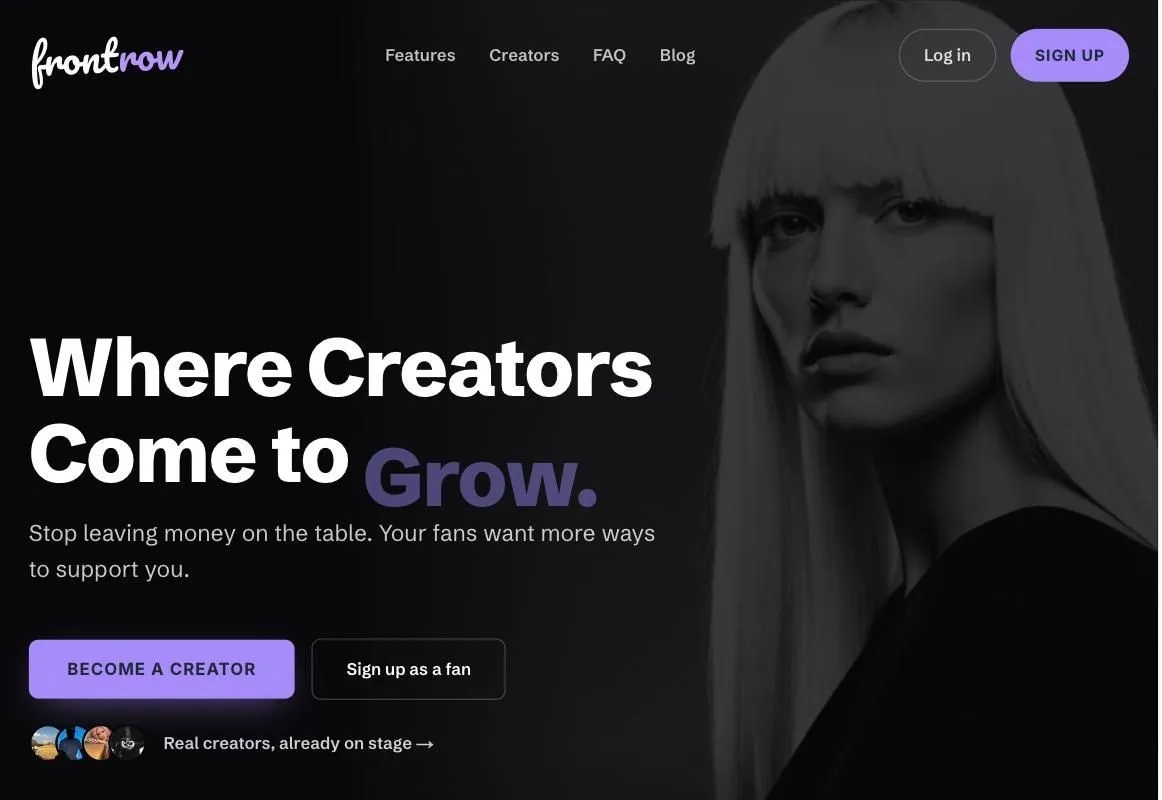
A creator monetization platform. Subscriptions, paywalled content and live streams. Built to keep fans engaged, not just subscribed.
- Client
- FrontRow
- Role
- Design and engineering
- Year
- Ongoing
The premise
FrontRow is a monetization platform for creators. Set a monthly price, paywall a post, take tips, stream live, sell calls by the minute, get paid out. Fans do the other half: subscribe, unlock, tip, watch, book, message.
It is two products in one window. A fan is casual and mobile; a creator is running a business, often through an agency managing a roster, and the largest reach the platform through an API without touching the interface at all. Behind the marketing page sit 85 routes, 219 API endpoints and 73 data models across five kinds of user.
The verification gate
Money only moves if both sides trust the surface it moves across, and the people this platform serves treat discretion and safety as first-order concerns. So the highest-stakes flow, identity verification, got the most deliberate design in the product.
You can start immediately; you can’t get paid until you verify. The gate sits on the money rather than the door, so the cost of handing over an ID lands at the exact moment a creator most wants to clear it. Inside the setup wizard, verify comes last, after photo, bio and handle, when the account already feels like theirs rather than an empty form.
The follow-through has rules the product can defend. Unverified creators are nudged on days 1, 3 and 7, then never again. Nudging pauses while documents are in review, because the system knows the difference between waiting on you and waiting on itself. And the home-feed banner resolves the same next step the wizard would, so two surfaces can never disagree about what you owe.
Spending you can read
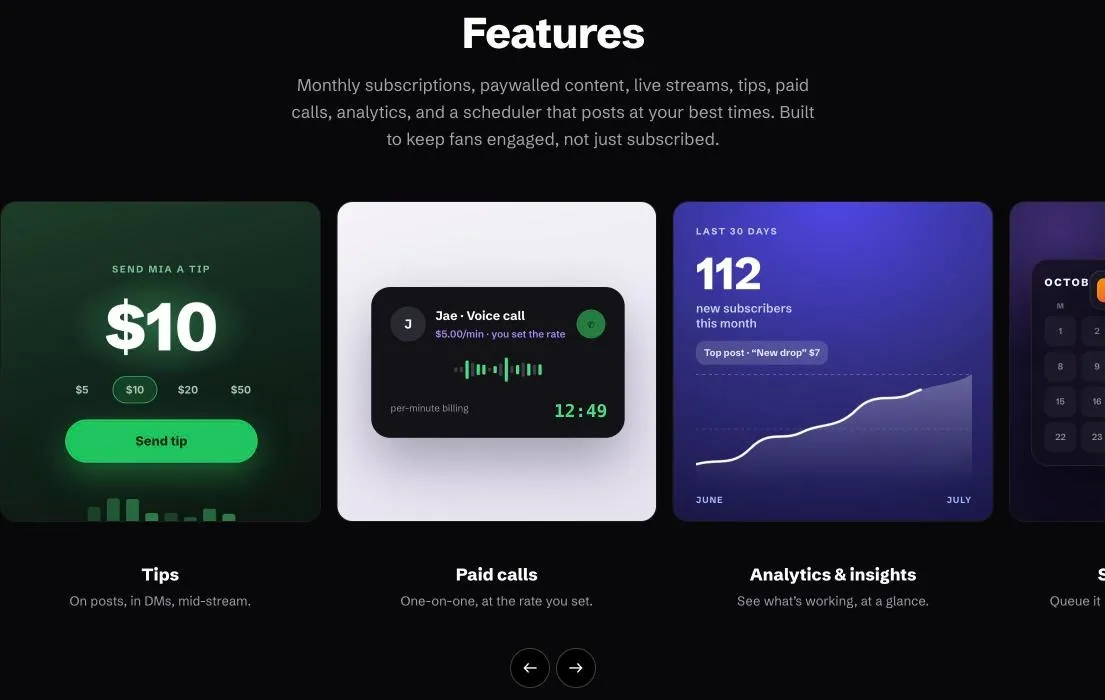
Six ways to pay is six ways to be confused about what something costs, so the interface holds a few hard rules. The brand is one violet. Money is green, and only money is green, so a fan knows they are about to spend before reading a word. Gating actions (Subscribe, Unlock, Tip, Withdraw) render uppercase while secondary actions stay sentence case. Disabled controls go flat grey, never faded violet. Depth is hairlines and tonal steps, with shadows reserved for things that genuinely float.
Live streaming has one grammar everywhere: red avatar ring, red chip, tap to join. Viewer counts hide below ten, because “3 watching” tells a fan to leave. Empty states pair an explanation with a real action, since a new creator meets every surface empty first. The whole system targets WCAG 2.2 AA in both themes, down to placeholder text held at body-text contrast and a reduced-motion alternative for every animation.
Technology
- Next.js 16 and React 19 in TypeScript, App Router
- Tailwind CSS 4, with the design system’s tokens as CSS custom properties
- Animation hand-written in CSS, no animation library in the dependency tree
- Prisma and Postgres, 73 models from posts to payouts
- NextAuth, Zod, Daily for live streaming, deployed on Vercel
Where it landed
Live, moving real money between fans and creators across subscriptions, paywalled posts, tips, streams and paid calls, with payouts running behind them.